

How Katia Hammond turned her South African roots into Milk & Marula
When Katia Hammond finished her A-levels in 2025, she wasn’t entirely sure what she wanted to do next. University was one possibility, but having moved to the UK from South Africa just two and a half years earlier, the cost of international tuition fees made her question whether it was the right path.
What she did know was that she loved skincare.
That led her to Purodem’s Diploma in Natural Skincare Formulation, where practical learning, ingredient research and conversations with Deana about her ambitions helped an idea take shape.
Today, Katia is preparing to launch Milk & Marula, an African-inspired skincare brand built around the botanical ingredients she grew up with, and a wish to bring them to more people in the UK.
We caught up with Katia to discover how she went from wondering what to do after school to preparing for the launch of her first skincare product.
Finding Her Own Direction

Moving to the UK meant Katia didn’t qualify for home tuition fees. “I wasn’t eligible for home fees for university, meaning I would be in over £100,000 of debt within 3 years,” she says.
Her parents were clear that she still had to study, so she started looking at online courses instead. “I didn’t want to do anything boring, so I thought, ‘What do I enjoy?’… SKINCARE!”
It wasn’t a passing interest. “I suffered from acne at a young age, so skincare has always played a big role in my daily routine.”
And it had roots back home. “I discovered my love for natural skincare in South Africa, where my mom used to buy me African-ingredient based skincare. Ever since moving to the UK, I have seen a lack of these ingredients and thought, let me help bring them to the UK.”
First, though, she needed to learn how skincare is actually made…
Discovering Purodem
Katia had always wanted a business of her own. What decided it was finding a course that would help her build one. “I always knew I wanted to have a business from a young age, so when I saw Purodem supports students in starting their own skincare brands, I was in straight away.”
She wanted to learn by doing. “I was looking for a course where I could put my learning into practice, so that I knew exactly what I needed to start up a skincare brand in the UK.” The diploma took her from skin biology to making face washes to cosmetic compliance.
More Than Mixing Ingredients
The practical work was the highlight. “I enjoyed the practical part of the course. I think this is the main reason people choose to do it, and it definitely didn’t disappoint. The videos, ready-made formulas and post-module calls were super helpful.”
It also showed her how exact formulation has to be. “Going through each module I saw how complex skincare can actually be, and how precise you need to be when measuring ingredients and following formulation methods.”
Working on her own taught her to be organised. “Creating something independently is always going to be scary, because you are the person responsible for anything that goes wrong,” she says. “I found planning and organising every aspect of a production run before I start formulating helped me to formulate consistently, avoid cross-contamination and work efficiently, especially while having to juggle other business activities.”

It’s also why some ingredients are waiting. “I have been very careful throughout this process with regard to Good Manufacturing Practice, so I’ve held off experimenting with some rarer African ingredients for now. So being organised is the best quality any product formulator can have.”
The Beginnings of Milk & Marula
Katia didn’t start the course with Milk & Marula in mind. The idea grew out of her calls with Deana. “As I had more post-module calls with Deana, she started asking me questions about what the future of my brand looked like.”
Those questions sent her back to her own background. “I started to ask myself, what was missing in such a saturated market that my background could help me with? African-inspired skincare… Most African skincare brands in the UK are either focused on melanin-rich skin or part of the luxury market. How could I solve both? Making African-inspired skincare for anyone! Affordable, accessible and inclusive.”
And the name? “Something cute, catchy and African.”
A Little Inspiration from The Kalahari
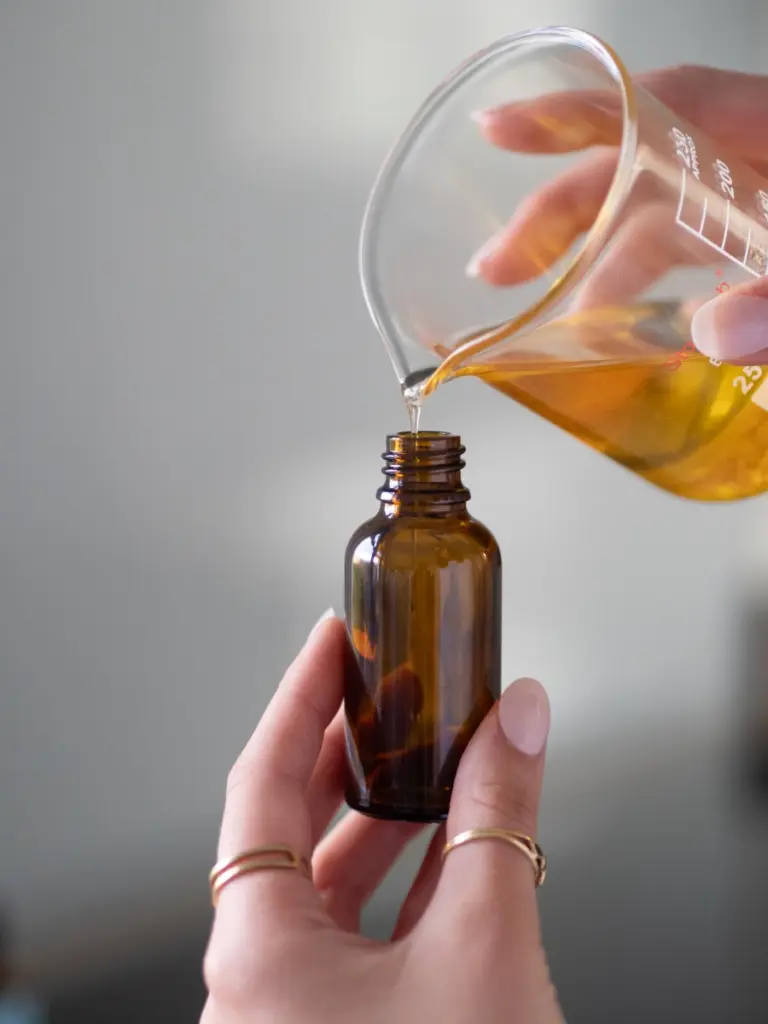
On the course, Katia made creams, gels, balms, oils and facial washes, and researched African botanicals as she went. “I did not know much about African botanicals, so I did a lot of research about what different ingredients did for the skin. I wanted my first product to be something I loved and used every day.”
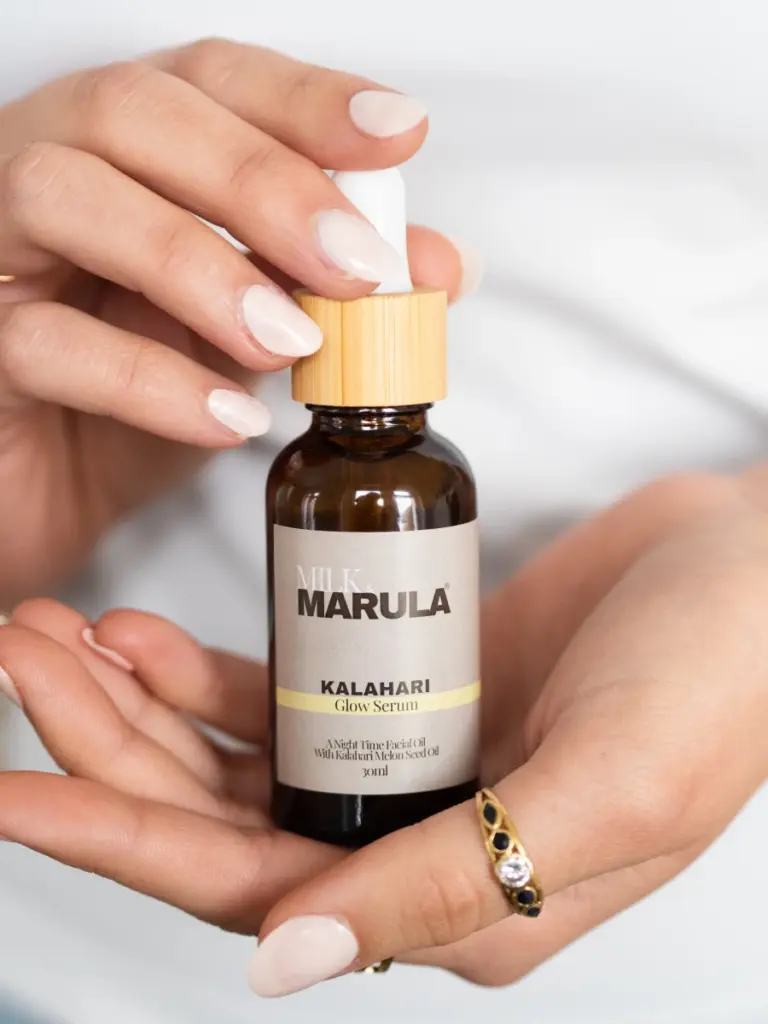
Then came Kalahari melon seed oil. “I had never used a facial oil before starting the course. After making a facial oil with Kalahari melon seed oil, I fell in love and the idea behind Milk & Marula’s first product was born.”
That oil became the Kalahari Glow Serum, and it’s only the start of what she wants to bring over. “Many brands use common ingredients like shea butter, but our goal is to bring other less common ingredients to the UK. So we formulate our products around the idea that skincare should be simple and full of amazing African ingredients.”
From Formulation to a Finished Product
A formulation that works isn’t yet a product you can sell, and for Katia, that’s where the course paid off most. “The most valuable parts, I’d say for people wanting to start a skincare business are the formulations themselves and the compliance module. The compliance module was the most useful part for my business once my formula was ready.”
It has already got her there. “Milk & Marula has had its next big milestone and we’ve finally got our compliance documents back with everything looking positive, meaning we are able to sell our products in the UK!”
A Diploma, a Business and a New Beginning
Finishing the diploma was one of her proudest moments, if a mixed one. “A big moment for me was finishing the course. It was so bittersweet. I really did enjoy learning and having my calls with Deana. I felt super supported and getting my diploma felt like one of the biggest wins I could have asked for.”
“Milk & Marula would not be where it is without Purodem.” Katia Hammond, founder of Milk & Marula
The next chapter: launching Milk & Marula
Launch day is set. “Milk & Marula launches on 5th December 2026 with our Kalahari Glow Serum (the oil I fell in love with during the course).” Two more products are planned by December 2027.
She isn’t thinking small. “We aim to make Milk & Marula the UK’s biggest African-inspired skincare brand, helping everyone feel confident in their skin and heal their relationship with skincare. Because it is time for African botanicals to get the recognition they deserve!”
What would Katia say to someone considering studying formulation?
She doesn’t hesitate. “My advice to anyone who is interested in natural skincare or starting a business in the skincare industry: this course is for you. Even if it is not your dream to formulate products forever, it is a great first step towards understanding what it takes to build a skincare line.”
“The business side of the course is a major benefit too, as it helps to make sure your product can be sold in the UK! The benefits you gain from the course outweigh anything that may be holding you back.”
Visit: Milk & Marula
Katia Hammond is the founder of Milk & Marula, an African-inspired skincare brand that aims to make botanical skincare affordable, accessible and inclusive. She studied the Diploma in Natural Skincare Formulation with Purodem, where the idea for the brand took shape. Milk & Marula launches its first product, Kalahari Glow Serum, on 5 December 2026.
Website: milkandmarula.com · Instagram: @milkandmarula · TikTok: @milkandmarula
Beyond the Classroom: Where could your studies take you?
Katia’s story is part of Beyond the Classroom, our regular spotlight series on Purodem graduates and what they have built since they finished studying.
If you would like to create your own skincare range, the Diploma in Natural Skincare Formulation takes you from the properties of each ingredient to finished, stable products, and through the compliance you need to sell them in the UK. Explore Natural Skincare Formulation