
There’s a real satisfaction in making something for one person and getting it right.
Not buying a base product off a shelf, and not the same batch as everyone else, but something you thought through for the individual in your care: for their skin, their life, and what they were hoping it would do.
That is the heart of what a therapeutic formulator does, and if the idea of it appeals to you, this is how you get there.
What the work is really like
A therapeutic formulator sits somewhere rather unique, at the meeting point of understanding plant materials and knowing how to build them into something real.
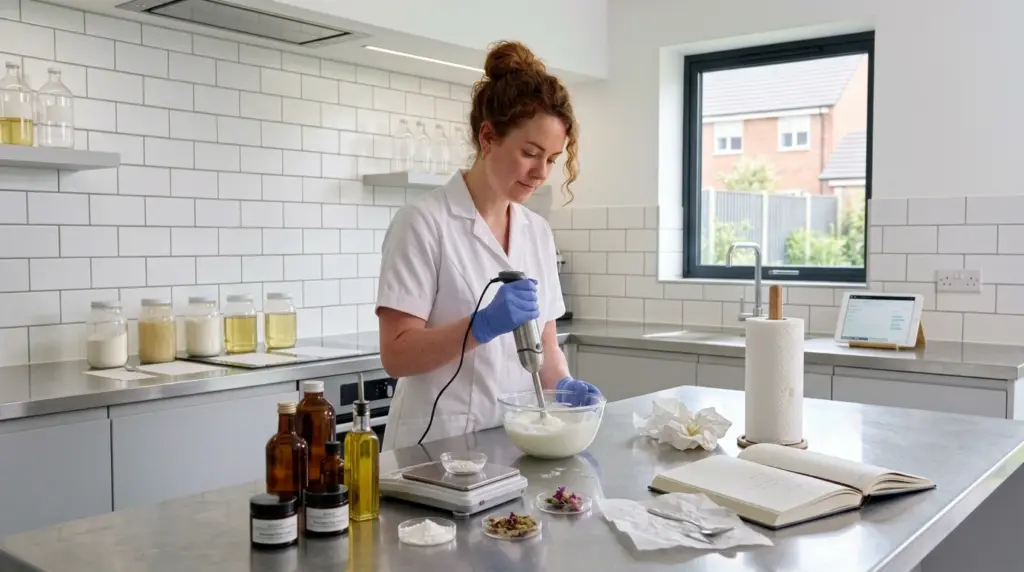
You talk with a person and come to understand what they need. You select the materials you’ll use for them, with a reason behind every ingredient choice. You then make the product safely and well, because you fundamentally understand how a formulation is constructed rather than copying a standard formulation, and you have the freedom and skill to adapt it next time, for your client or for the next person, who perhaps needs something a little different.
It’s quietly rewarding work. The people you formulate for tend to notice the difference, because something made specially for them feels different from something made commercially for the general public.
And there’s a particular confidence that comes from being able to look at your own formulation and say exactly why each thing is in it. That is what it feels like to own a craft rather than follow one.
You don’t need to be a scientist
This is worth saying plainly, because it stops a lot of people before they begin: you do not need a science degree, and you do not need years of experience behind you. Those things help, but they are not the door.
What you need is curiosity, care, a genuine intention and a willingness to understand the reasons behind what you do.
Many people come to this already working with others, in complementary or holistic practice, in beauty or massage, as carers or in other health-related roles, and they fold formulating the ITF way into what they already do.
Others arrive as keen makers who want to go deeper, or as complete beginners starting fresh. All of those are good places to begin.
And if you already work with people, you’re bringing something valuable with you, because you already understand what it is to listen, to care, and to work to someone’s needs.
What you’ll learn
Becoming a therapeutic formulator means learning the fundamental things that fit together well.
You learn your materials: aromatic essential oils, CO2 extracts, vegetable and carrier oils, hydrolats and plant actives, and how they behave alongside one another.
You learn to formulate: to build stable, safe products of different kinds and keep them well. You learn the thinking that ties it all together, so that you can start from a person and formulate for what they genuinely need.
You learn the honest, non-medical scope the work sits within, so that you can describe what you make plainly and stand behind every word.
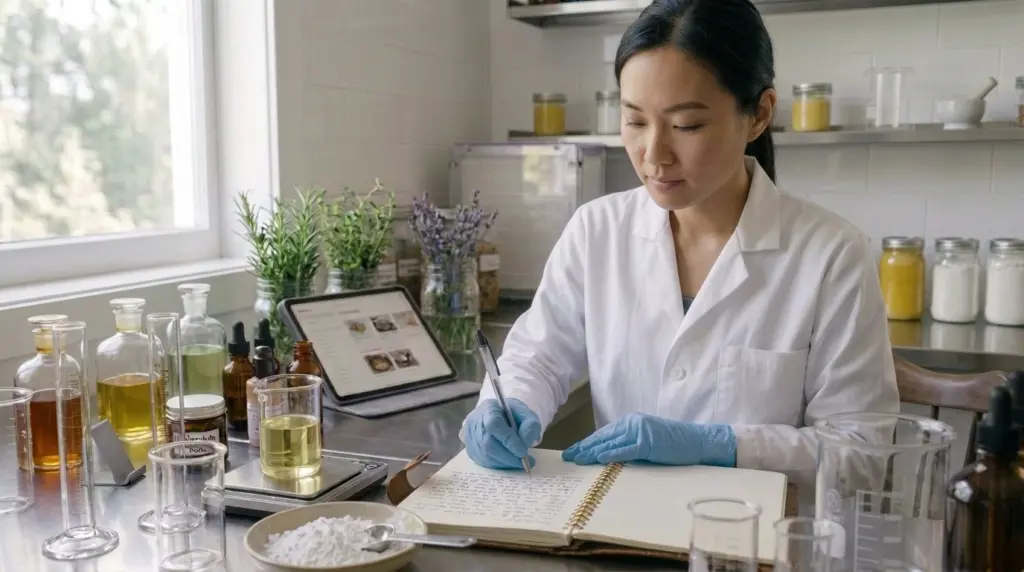
And you learn to record your work for each client, in a Client Formulation Plan, so that a formulation can be repeated and refined over time.
None of it is beyond a committed beginner. It’s a craft you can learn step by step, which is exactly what a good course is for. You can see the whole of it in our explanation of what Integrative Therapeutic Formulation is.
Where it can take you
Once you can do this, a few things open up.
You can create considered products for the people you already work with, and give them something no off-the-shelf commercial product can offer: real consideration.
You can build a small, genuine community practice around it, the kind where people come back to you because what you make actually suits them.
And you can help shape a field that is still taking shape itself, as one of the people who understand it properly and early.
It’s skilled, personal, independent work, and there is room in the world for more people doing it well.
How to start
The clearest way in is a course that teaches the materials, the making, the thinking and the scope together, rather than leaving you to gather them in pieces.
That is what Purodem’s Integrative Therapeutic Formulation programme is built to do. It’s taught by me, Deana Kassim. I created the Integrative Therapeutic Formulation qualification and developed it alongside our Purodem team, and it’s designed so that you can go on to practise with appropriate professional insurance.
If this is the work you’d like to do, you can find out everything about the course, and take the next step, on the Integrative Therapeutic Formulation course page.