
How a pharmacist’s lifelong interest in plants became a practice of her own
What connects a childhood on a dairy farm, a career in pharmacy, a chance meeting in the Himalayas and a fascination with essential oils? For Jean Woolcock, these separate threads eventually came together in an unexpected way.
After years in pharmacy and the pharmaceutical industry, Jean decided to return to a long-standing interest in the therapeutic use of plant essential oils. That decision led her to Purodem’s Professional Essential Oil Therapy Diploma, and then to founding The Fragrant Dispensary.
We caught up with Jean to hear how her love of nature and science became a new professional direction, what it was like to study again, and how she’s bringing a little of the traditional apothecary into modern essential oil practice.
A farmer’s daughter with a fascination for science
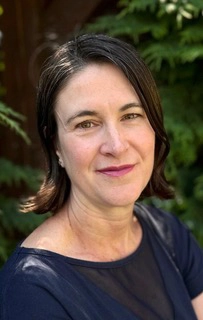
“I am a farmer’s daughter from a long line of farmers,” Jean says. “I grew up on a working dairy farm and always had a respect and appreciation for the abundance of nature.”
Science was her other love, though the career advice wasn’t much help. “I was good at and enjoyed the sciences, but I knew I didn’t want to be a Vet or Doctor, which were the only options provided to me by the school’s career service!”
A part-time job pointed the way. “I had a part-time job in a pharmacy which I loved. I enjoyed the people, the customers, and helping them find the right solution. It was a local independent chemist where we would be just as likely to recommend something they already had as a home remedy, and still occasionally made up our own tinctures.”
The next step followed naturally. “I decided to do a Pharmacy degree without much thought to what I would do with it!”
An unexpected encounter in the Himalayas
How did a pharmacist end up studying essential oils? “Lots of threads came together!”
The first was at university. “One of my University professors lectured on pharmacognosy, and I found it fascinating how many of our medicines originated from plants and how plants and traditional remedies are still an active area of research in the discovery of new treatments.”
The second was a long way from the lecture theatre. “In my twenties, I trekked the Annapurna range and shared a tent with a lovely lady who brought a box of essential oils as her first aid kit. I was fascinated by how they were used.” Her tent-mate recommended Valerie Ann Worwood’s The Fragrant Pharmacy, and Jean bought it and read it.
Returning to the classroom
After hospital and community pharmacy, Jean settled into the pharmaceutical industry. “As a pharmacist, part of my role involved reviewing and approving materials and activities that Pharma companies created about their medicines.”
When she resigned to set up her own company, she started thinking about what else she might do. “I kept coming back to my fascination with plants as medicines, in particular essential oil therapy.”
She knew exactly what kind of course she wanted. “I wanted to find a course that would be in-depth and robust (not a 6-week online course), so that I would be educated on essential oil chemistry, formulation and safety, and that’s how I found Purodem.”
It was hard work, and she loved it. “I loved it and found it challenging as it was very thorough! My brain isn’t as young as it was when I studied my degree, and I also now had a business and three teenagers to cope with.”
Learning that goes beyond the textbook
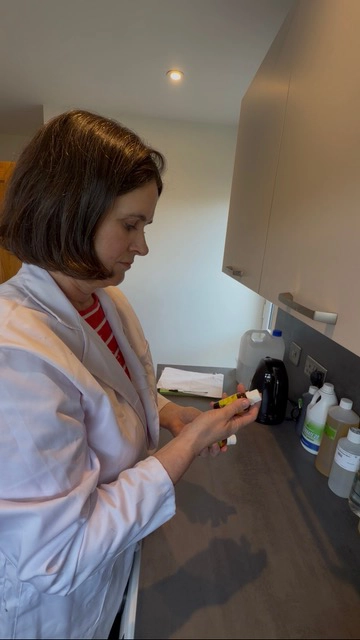
The casework suited her. “The case studies were a brilliant way to learn. My learning style is very hands-on and practical; I’m not great at theory for theory’s sake. Being able to apply what I was learning to individual cases really helped me understand.”
So did having a tutor to talk things through with. “Deana was very knowledgeable and supportive. She was able to provide a viewpoint and experience you can’t get from just reading articles.”
It changed how she thinks about every formulation. “The course also reinforced how much there is to consider for each individual oil and client.”
“Even with a pharmacy degree, I still had lots to learn, and Purodem gave me the knowledge and guidance I needed.” Jean Woolcock, pharmacist and founder of The Fragrant Dispensary
Where pharmacy and essential oil therapy meet
Her pharmacy training runs through everything she does. “As a pharmacist, I am very aware that effective medicines have side effects. It’s a constant search to find one that doesn’t!”
So do the basics of good practice. “The importance of traceability, ingredient quality and good formulation practice are all foundations of pharmacy knowledge. I’ve loved returning to some of the formulation skills I learnt during my degree.”
Years in the industry also taught her to care about evidence. “I’m always delighted when I find clinical studies or research that show the effectiveness of essential oil use. While it’s great to know one person feels it worked for them, I do love a good piece of well-designed research.” She especially enjoys seeing traditional uses examined by modern science: Greek scholars once wore crowns of rosemary, and a more recent study found a link between levels of 1,8-cineole in the blood, after rosemary essential oil was diffused, and performance on memory and focus tasks.
She’s just as clear about the limits. “I am very conscious of where my limitations are, and the importance of referring to other healthcare professionals where appropriate or to check something is not a sign of a more serious issue.”
“As a pharmacist who has worked across community, hospital and industry, I support the appropriate use of conventional medicine. I’m interested in how essential oil therapy can support wellbeing and complement other approaches. I want people to understand what essential oils may be able to offer, but also their limitations and when they aren’t the right choice.”
The Fragrant Dispensary
The name looks back to the pharmacy of her youth. “I wanted a name that brought together pharmacy and essential oils. I also wanted to convey an old-style pharmacy where the pharmacist would listen to your symptoms and then go and formulate a liquid or powder for you to take.”
The name looks back to the pharmacy of her youth. “I wanted a name that brought together pharmacy and essential oils. I also wanted to convey an old-style pharmacy where the pharmacist would listen to your symptoms and then go and formulate a liquid or powder for you to take.”
It was also a way back to working with people. “My career in the pharma industry has given me lots of experience, but I did miss being able to help individuals.”
Hands-on treatment was never the plan. “I don’t come from a therapist background, and that isn’t a direction I want to take. I see myself more like a traditional apothecary working with essential oils to develop personalised formulations.”
Every client starts with a consultation. “I seek to understand why they have come and take a full medical history, including what other medications or supplements they are on. I’ll then prepare a bespoke formulation that fits into their lifestyle, which could be an aromastick, rollerball, balm, cream, bath oil, etc. I provide instructions for how to use it and any follow-up needed from me, or advise on other healthcare professionals to consult.
Her studies gave that a shape. “My PEOT training has given me a structured way to approach that: from understanding the oils and their chemistry to considering formulation, safety and individual needs. It brings together everything that brings me joy: science, nature and helping people find an approach that works for them.”
Turning an idea into a business
The hardest part has been finding clients. “My biggest challenge was finding clients that hadn’t been case studies. As I don’t offer any hands-on therapy treatments, not many people are aware of how else essential oils could be used. Most think of these as ‘just nice smells’.”
Being the only one locally cuts both ways. “There are not any other essential oil therapists in my area, which could be an advantage, but equally means no one else is educating on essential oil use to open up the client base.”
The business plan she wrote on the course has kept her costs sensible. “The task of submitting a business plan was a very useful exercise. It showed that to have a consulting space means having a client base that will cover the cost. At the moment I’m doing online consultations until I have enough of a client base to afford to hire a regular space.”
Taking essential oils beyond ‘nice smells’
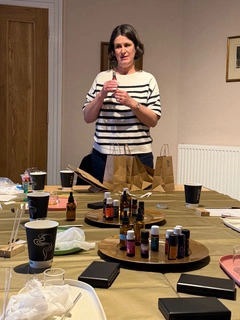
That’s where the workshops come in. “I developed the workshops to try and educate on essential oils and take people’s knowledge of them beyond being nice smells. In my compliance role, I do a lot of company training, and it’s something I enjoy.”
They’re working. “I really love the workshops; I’ve had positive feedback and repeat attendees. I’ve also had a couple of individual clients who came to a workshop and followed up with a 1-2-1 consultation. Seeing others understand how essential oils could be used for wellbeing is really rewarding.”
One convert stands out. “Most of my workshop attendees are women. I had one man attend (reluctantly) who then became a huge fan, as he could see the science behind the use of essential oils. I love that I’ve been able to change someone’s perception.”
Would Jean recommend returning to study?
To anyone with a healthcare background or an established career, she’s honest. “I’d say it’s probably harder work than you think. I found the Physiology and Anatomy modules more thorough than my Pharmacy degree! Having a scientific background was helpful, but I still had lots to learn. The chemistry, formulation and practical application of essential oils are all areas where you need proper knowledge and guidance.”
“For me, the course brought together two interests that I’ve had for a long time, science and nature. It also gave me the confidence to develop a business around something I care about.”
What’s next for The Fragrant Dispensary?
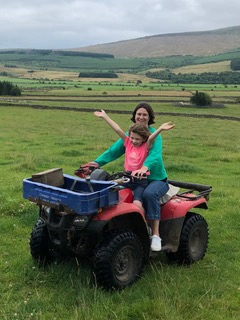
More of the same, and further afield.
“I plan to continue building awareness of what essential oil therapy can offer and help spread the word that essential oils are more than just nice smells. The workshops are an important part of that.”
She’s exploring more workshops and has invested in a stall at the Health & Wellbeing at Work Conference in March to see if she can take the workshops into corporate wellbeing programmes.
“Alongside that, I’d love to grow the consultation side, developing bespoke formulations for people who want to explore how essential oils might support their wellbeing.”
From the dairy farm to the chemist’s counter, a tent in the Himalayas and years in pharmaceutical science, it’s an interest that never went away.
Now it’s her work.
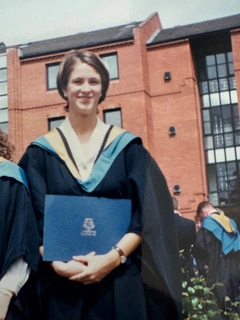
Meet Jean Woolcock, The Fragrant Dispensary
Jean Woolcock is a pharmacist and the founder of The Fragrant Dispensary, which offers one-to-one essential oil consultations, bespoke formulations and educational workshops. She has worked across hospital and community pharmacy and the pharmaceutical industry, and studied the Professional Essential Oil Therapy Diploma with Purodem.
Website: The Fragrant Dispensary · Instagram: @the_fragrant_dispensary
Beyond the Classroom: Where could your studies take you?
Jean’s story is part of Beyond the Classroom, our regular spotlight series on Purodem graduates and what they have built since they finished studying.
Jean built her practice around the person in front of her: a full consultation, then a formulation made for them. If you want to work that way with your own clients, that is what Integrative Therapeutic Formulation teaches. Deana created the qualification, and it runs at Level 3 and Level 4. Explore Integrative Therapeutic Formulation